Showing posts with label News. Show all posts

Wednesday, May 25, 2011

Greek Commissioner warns about leaving euro

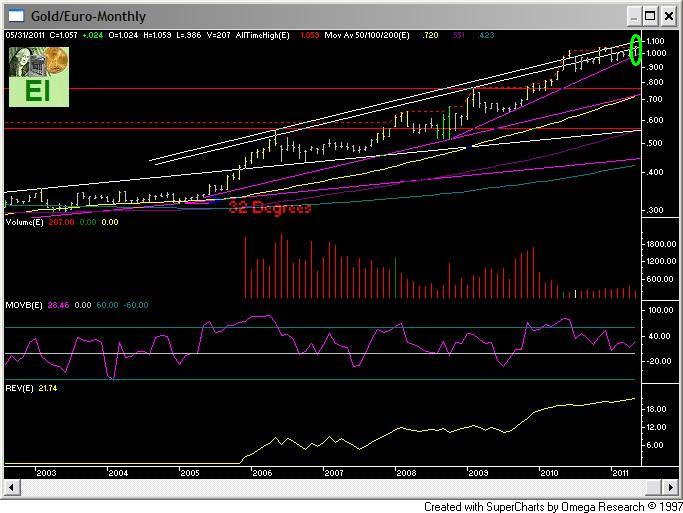
Capital anticipates while politicians talk of possibilities. Euro gold at new highs reflects capital voting with their feet about the future of the EU. The same can be said for U.S. dollar gold.

Euro Gold:


A Greek EU Commissioner warned that the country's participation in the euro was under threat, though the prime minister insisted Wednesday his government would see through new austerity measures and keep Greece in the joint currency.

The EU's Fisheries Commissioner, Greece's Maria Damanaki, warned that "The scenario of removing Greece from the euro is now on the table."

"I am obliged to speak openly. We have a historical responsibility to see the dilemma clearly: either we agree with our borrowers on a program of tough sacrifices with results ... or we return to the drachma," she said in a statement on her personal website.

Mark Haines Dies: CNBC Anchor Dead At 65

Mark Haines Dies: CNBC Anchor Dead At 65


Tuesday, May 24, 2011

Court Orders New Jersey to Increase Aid to Schools

Public spending deemed a constitution right in NJ. QE cannot stop because the system is utterly dependent on it. The late run in gold and silver suggests the market understands this reality.

Headline: Court Orders New Jersey to Increase Aid to Schools

The New Jersey Supreme Court ordered the Christie administration on Tuesday to increase state education aid by $500 million in the coming school year, saying it had failed to meet its constitutional obligation to provide adequate educational resources for poor and minority children.

In a 3-to-2 ruling, the court directed that the additional aid be distributed among 31 school districts in historically poor cities like Camden, Newark and Paterson — the so-called Abbott districts at the heart of a school financing case, Abbott v. Burke, that has roiled state officials and courts for three decades.

Coffee price hikes will bring tough wake-up calls

The seeds of hyperinflation have been sown. Soon the public will have to deal with the harvest.

Coffee drinkers are facing a tough wake-up call: Retailers are finding it increasingly difficult to hold the line as rising commodities prices percolate through the system.

At the Coffee Tree Roasters shops in metropolitan Pittsburgh, Pa., prices have just increased for the first time in at least two years.

"We held out to try to see where the market was going to settle out," said Bill Swoope, co-owner of five coffee shops as well as Iron Star Roasting Co., a wholesale roaster in West Mifflin.

Retail Money Chases Its Tail

Retail money chases its tail while connect players setup the market. Yesterday's commentary, Invisible Hand of Control In Crude Oil, discussed the setup well ahead of the newswire flash.

Headline: Crude Oil Rises as Dollar Slips, Goldman Sachs Boosts Brent Price Forecast

Oil rose the most in almost a week in New York as the dollar declined, boosting commodities’ appeal as an alternative investment, and Goldman Sachs Group Inc. and Morgan Stanley increased their oil-price outlooks.

Oil jumped as much as 2.3 percent as the Dollar Index, which tracks the currency against six major counterparts, slipped from a seven-week high and U.S. equities advanced. Goldman Sachs and Morgan Stanley raised their estimates for Brent oil futures, saying the prolonged conflict in Libya is eating into OPEC spare capacity.

“The dollar’s under pressure and you’re having a bit of an equity market rebound,” said Gene McGillian, an analyst and broker at Tradition Energy in Stamford, Connecticut. “The upward revisions to some of the investment-bank oil forecasts may be lending a certain positive sentiment to this market.”

Monday, May 23, 2011

Fear Sees Only The Obvious In Copper

Screaming sell when prices are falling is comparable to yelling fire in a crowded movie theater. This technique is effective in the trading world because the flight or fight response is difficult to suppress. Discipline supported by knowledge is critical to acting without emotion. The following chart illustrates a classic weak to strong hand transfer into weakness in copper.

Copper (JJC) And Copper Diffusion Index (DI)


Headline: Low China Imports, Strong Dollar Pressure Copper

Copper futures fell nearly 4% as another sharp decline in China's copper imports and a stronger dollar pressured prices.

In recent months Beijing's tighter monetary policy has forced many factory managers to use up inventories without replenishing them. Companies that use copper to make electrical wiring and other products—the main source of copper demand in China—are struggling to get credit, and many are relying on "hand-to-mouth" purchases to feed production lines.

China is the world's top copper consumer, accounting for 30% of demand, but imports have been on a steep decline in recent months. On Monday, China reported its imports of the metal in the first four months of this year were 756,199 metric tons, 29% less than the same period last year. April refined copper imports fell 48% from a year earlier and down 17% from last month to 160,236 metric tons.

Invisible Hand of Control In Crude Oil

The invisible hand of control is not restricted to the gold and silver market. The well-defined and recognizable money flow footprint can be found in the crude oil market.

Crude Oil (WTI) and Crude Oil Diffusion Index (DI):


Prices will continue to climb once the fuel is exhausted.

Headline: Oil slides and pump prices drop

Oil dropped more than 2 percent Monday as the dollar strengthened and an energy research group said it expected growth in Chinese demand for oil to slow later this year.

At the pump, gas prices continued to fall as oil retreated.

Benchmark crude for July delivery lost $2.44, or 2.4 percent, at $97.66 per barrel on the New York Mercantile Exchange in afternoon trading. In London, Brent crude gave up $2.62 or 2.3 percent, at $109.77 per barrel on the ICE Futures exchange.

Crude dropped as the dollar rose against other currencies. Oil is priced in dollars, and it tends to fall as the dollar rises and makes crude more expensive for investors holding foreign money. The U.S. Dollar Index, which measures the dollar against other major currencies, rose 0.8 percent amid concerns about Europe's debt crisis.

Empty Your Pockets With A Handshake And Smile

If you feel like a dog chasing its tail in gold, silver, even stocks, it’s time for a new strategy. Certain players will empty your pockets while you shake their hand in gratitude for 'good' information. You’re either a buyer or seller. Fence sitters make for easy targets.

Russell 2000 (IWM) and the Commercial (C) Less Nonreportable (NR) Traders COT Futures And Options Stochastic Weighted Average of Net Long As A % of Open Interest


SP 500 And Equity Diffusion Index (DI)


Sell in May and go away? Unfortunately, the game is not that simple.

Headline: Stocks: 'Sell in May' likely to continue

Investors have taken the old Wall Street adage of "Sell in May, then go away" to heart this year, and the stock market's slump is likely to persist during the last week of the month.

The Dow (INDU), S&P 500 (SPX) and the Nasdaq (COMP) have each lost more than 2% during the past three weeks, pressured by the latest round of economic and corporate news, which are suggesting that the economic recovery may be slowing.

355Print Last week, reports on housing starts and existing home sales came in weaker than expected, and regional manufacturing activity slowed to the lowest level since October.

Source: money.cnn.com

Sunday, May 22, 2011

States shorten duration for unemployment benefits

Yet another reason QE(n) will continue.

Some of the states that have drained their unemployment insurance funds are cutting the number of weeks that a laid-off worker can count on those benefits. Legislators are trying to limit tax increases for businesses to replenish the pool and are hoping the federal government keeps stepping in when the economy slumps.

Michigan, Missouri and Arkansas recently reduced the maximum number of weeks that the jobless can get state unemployment benefits. Florida is on the verge of doing so. Unemployment in those states ranges from 7.8 percent in Arkansas to 11.1 percent in Florida.

The benefit cuts come as legislatures deal with the damage that the recession inflicted on state unemployment insurance programs. The sharp increase in the number of people who lost their jobs drained the reservoir of money dedicated to paying out benefits.

Source: finance.yahoo.com

Friday, May 20, 2011

Home Sellers Provide Last-Resort Loans

An increasing number of desperate buyers and sellers are reaching agreements that traditional, non-securitized lending conduits would not touch. Signs of credit strain are everywhere to be seen for those willing to look.

Sue and Douglas Reed knew no bank would give them a mortgage -- not with a bankruptcy and two foreclosures fresh in their credit history. They turned to Hilarie Walters, whose childhood home on 15 acres in Marshall, Mich., had been on the market since 2009, a year after she inherited it. Walters agreed in December to sell the property to the Reeds for $105,000. She also consented to a risky payment plan that in effect makes her the couple's mortgage lender. "They're paying me interest every month, but I'd rather have the money and be done with it," says Walters, an unemployed single mother who is using their payments to cover the mortgage on her Battle Creek (Mich.) residence. "It does make me nervous."

Source: finance.yahoo.com

Hey Gold Bugs There's Strength In Numbers

1.3 billion Chinese and 1.1 billion Indians are buying physical gold. The game of perception uses labels such as gold bugs and ‘out-of-touch morons’ (read between the lines on F-TV or similar) to create an emotional response despite the message of the market. It’s an effective game that discourages physical ownership through the human tendency/desire for group acceptance.

Emotions have nothing to do with interpretation the message of the market. Often the difference between connected and retail money is knowledge and discipline. The later lacks both.

The trend is up and there’s Chinese and Indians are providing new meaning to the old phrase strength in numbers.

Headline: China Is Now Top Gold Bug

Chinese investors are snapping up gold bars and coins, buying more than ever before in the first quarter of 2011 and overtaking Indian buyers as the world's biggest purchasers of the metal.

China's investment demand for gold more than doubled to 90.9 metric tons in the first three months of the year, outpacing India's modest rise to 85.6 tons, the World Gold Council said in its quarterly report on Thursday. China now accounts for 25% of gold investment demand, compared with India's 23%.

The report underscores the rising appetite for gold among the growing middle-class in China. Fears of the country's soaring inflation, as well as a search for new investments, is luring investors to gold, and marketing of the precious metal has also increased in recent months.

"I think people will be surprised by the strength in the Chinese demand, but we think this is a trend that is set to continue," said Eily Ong, an investment research manager at the gold council.

Source: finance.yahoo.com

Wednesday, May 18, 2011

Fed considers tighter credit as economy improves

Key word here is considers. Debate and action are two separate issues. Enacting policies to tighten credit while recent data reveals a broad based contraction would be politically unwise.

The Federal Reserve last month began debating how it should start reversing policies that pumped billions of dollars into the economy during the recession. Some members said the Fed might need to start boosting interest rates this year to guard against inflation.

Fed policymakers didn't commit to taking any action at the April 26-27 meeting, according to minutes released Wednesday. But they agreed the economy was improving and if that continued the Fed would need to remove its massive to prevent consumer prices from getting out of control.

A majority of participants said the best method for tightening credit would be to lift the federal funds rate, which is now at a record low near zero. The federal funds rate is the interest banks pay each other on overnight loans. Raising that rate would likely precede sales of mortgages or Treasury securities in its vast portfolio.

Source: finance.yahoo.com

US Housing Starts Supports Continuation of QE(n)

QE(n), either direction or indirect, will continue well after June 2011. The sharp and unexpected deterioration in US housing starts trend illustrates why.

Housing Starts And Change YOY


Headline: U.S. Housing Starts Unexpectedly Fall to 523,000 Pace


Source: washingtonpost.com

Fed Easing Policy Driving Rates Lower-Ironically

The market, not the Fed, sets interest rates.

Interest rates are heading lower, counter to what many in the bond market thought might happen as the Federal Reserve reaches the end of its quantitative easing program.

The 10-year yield Tuesday slipped below 3.1 percent, just above a key technical level of 3.05/3.07 percent and the psychologically important 3.0 percent level. Treasury yields fall in an inverse move as buyers push bond prices higher.

Strategists say there are several catalysts moving bonds, including a series of weaker economic data; reinvestment from accounts that were in cash; and the flight to safety on concerns about European sovereign debt.

Source: finance.yahoo.com

Gold Shares Are Raising Dividends

Gold companies from emerging to major producers, unbeknownst to most investors – even within the dedicated gold community, have slowly begun the process of issuing and raising dividends. Investors, often blinded by fear and emotions generated by ebb and flow within the trend, tend to ignore the impact of dividend on total return. Smart money recognizes a growing number of inaugural issuances and payout increases, i.e. the movement of money, despite headline ‘talk’ that encourage doubt and fear. As the old saying goes, talk is cheap, but the movement of money is dear.

Long-term gold indices such as S&P Gold (Formerly Precious Metals Mining)* illustrated below do not include the distribution of dividends into its trend. This means capital appreciation indices severely understate total return during periods of skyrocketing dividend payouts.

S&P Gold (Formerly Precious Metals Mining)*
*S&P Gold from 1945, Barron's Gold Stock Index from 1939-1945, 1922-1939 Homestake Mining


Headline: Nevsun Declares Inaugural Semi-Annual Dividend

Nevsun Resources Ltd. (TSX:NSU - News)(AMEX:NSU - News) is pleased to announce that the Company's Board of Directors has approved a semi-annual cash dividend of US$0.03 cents per common share (US$0.06 per common share annually). The dividend is payable on July 15, 2011, to shareholders of record as of the start of business on June 30, 2011.

"The successful startup of the high grade, low cost Bisha mine is the start of significant cash flow for the Company. We are focused on significant internal reserve expansion at Bisha, as we strive to double our reserves this year, while also reviewing additional opportunities for Nevsun," said Cliff Davis, Chief Executive Officer. "With $103 million cash at quarter end and significant ongoing cash flow, Nevsun is well positioned to fund this growth and provide a dividend return to our shareholders."


Source: finance.yahoo.com
Competition To Change The Landscape of Control

Competition always changes the landscape of control. It will be interesting to see how the COMEX money flows will adjust to this news.

Headline: Hong Kong Mercantile Exchange Receives Trading Authorisation From Securities and Futures Commission

The Hong Kong Mercantile Exchange (“HKMEx”) announced April 27 that it has received authorisation from the Securities and Futures Commission to operate as an automated trading services (“ATS”) provider. Approval has also been given for its trading debut on May 18, 2011.

The ATS authorisation grants HKMEx the right to offer market participants, through its member firms, the use of its state-of-the-art electronic platform to trade commodities. The Exchange will begin trading with at least 16 members including some of the world’s largest financial institutions and trading firms as well as several well-established brokerages in Hong Kong.

“We are very excited about this historic day. It allows us to establish a liquid and vibrant international commodities exchange based in Hong Kong, linking China with the rest of Asia and the world,” said Barry Cheung, chairman of HKMEx. “Global demand for core commodities has in recent years been driven by Asia, especially China and India. However, market participants in the region have had to rely on Western exchanges for price discovery, bearing the basis risk exposure in the process. Our new platform will offer Asia a bigger say in setting global commodity prices. It will also enable market participants to more actively manage their risk exposures, using products tailored to Asian market needs.”

HKMEx’s broking members at launch include BOCI Securities Ltd, Celestial Commodities Ltd, CES Capital International Co. Ltd, Chief Commodities Ltd, ICBC International Futures Ltd, Interactive Brokers LLC, KGI Futures (Hong Kong) Ltd, MF Global Hong Kong Ltd, Morgan Stanley Hong Kong Securities Ltd, OSK Futures Hong Kong Ltd, Phillip Commodities (HK) Ltd, Tanrich Futures Ltd and TG Securities Ltd. Its three clearing members are Interactive Brokers (UK) Ltd, MF Global UK Ltd and Morgan Stanley & Co International Plc.

The first product to trade on the Exchange will be a 1-kilo gold futures contract offered in US dollars with physical delivery in Hong Kong. Trading hours will run between 0800 to 2300 Hong Kong Time, overlapping commodity markets in Europe and the US. “This helps to promote cross-continent trading and boost liquidity,” said Albert Helmig, president of HKMEx. “It also offers participants extensive opportunities for hedging, arbitrage and effective risk management.”

Source: asiaetrading.com

Liquidity-Based Rather Than Fixed Gold Standard

A fixed gold standard will not stop the boom/bust cycle of credit and debt that accompanies economic expansions and contractions. People often forget that the gold standard did not prevent the Great Depression. This is why any 'gold standard' must be liquidity based. Any system that lack flexibility will be repealed during the crisis. Roosevelt quickly learned this lesson in 1932.

Headline: The Gold Rush: Conservative Economists and States Push for Gold Standard

In a move that reflects growing anxiety over rising inflation and a weak economy, South Carolina became the newest state to propose a bill that would make gold and silver coins a form of legal tender in the state.

Utah started the trend, becoming the first state on May 9 to recognize gold and silver coins minted by the U.S. government as legal tender. More than a dozen other states are considering similar moves.

Gold is increasingly taking the spotlight as worries about inflation and a debt crisis grow.

Publisher and one-time presidential candidate Steve Forbes this month joined the chorus of noteworthy economists and businessman predicting a return to the gold standard.

Source: abcnews.go.com

Tuesday, May 17, 2011

Public Confidence Is Fickle, Be Prepared

Public confidence is fickle. One minute everything seems ‘normal’ and the next all hell is breaking loose. Yes, the dominoes that started falling in 2008 have not stopped. Does the public recognize the severity of the risks (leverage within the financial system)? Absolutely not!

In the past, bank runs materialized when depositors (the public) sensed impending insolvency. Today that sense has been dulled by deposited insurance backed by the printing press. So far the relatively slow and orderly loss of purchasing power in the US dollar, i.e. higher food and energy prices, has yet to rattle confidence to the point of decisive action. In other words, the public has yet to seek alternatives to fiat en masse.

What happens if, more likely when the loss of purchasing power transitions from slow and orderly to fast and chaotic? FDIC deposit insurance and other carrot-on-a-stick programs won’t be enough to prevent bank runs. This is the clear lesson from history unless millions of years of human evolution and behavior designed to ensure survival suddenly disappears in the next five years.

Headline: Savers may flee U.S. banks

Eric Sprott, the Canadian money manager who in 2008 predicted banking stocks would collapse, says U.S. savers will eventually pull their money out of banks that are carrying too much leverage on their balance sheets.

Banks are leveraged 20 to one and their portfolios are mainly composed of government bonds and mortgages, the founder of Sprott Asset Management Inc., said Friday at the SALT, or SkyBridge Alternatives, conference here.

"House prices keep going down, the number of people under water keeps getting worse," said Sprott, 66, who is chief executive officer of the Toronto-based firm.

Source: theprovince.com

From Bob

Monday, May 16, 2011

I Haven`t Shorted Bonds Yet. I Am Going To Start Shorting Soon, Jim Rogers

Perhaps Jim Rogers 'sees' the formation of another bearish setup in the bond market.

I haven't shorted bonds yet, but you have a very good memory. I'm going to start shorting bonds soon. In fact, maybe when we finish this I might go over and short some bonds now that you've reminded me. - Jim Rogers in The Street.com

Source: jimrogers-investments.blogspot.com
Video: bcove.me

Unusual Credit Trends In Commercial Banking

Fractional reserve banking is like a shark, credit must continue to expand (swim) or it faces death. This explains the unprecedented panic, as reflected by the speed and magnitude of the coordinated quantitative easing, to unclog the credit markets and restart lending process.

Credit creation is clearly stumbling. Commercial banks are beginning to hoard cash and treasury securities while critical sub sectors such real estate (including home equity) and consumer loans’ contribution to total bank credit continues to shrink. The red boxes below illustrate new swing lows in their percentage contributions since the onset of the crisis in 2008.

Why are commercial banks still aggressively hoarding cash assets (equivalents) and treasury despite the end of the Great Recession in 2009? Perhaps, there’s more or less to this economic recovery than advertised.

Total Bank Credit, All Commercial Banks.